23 November, 2026
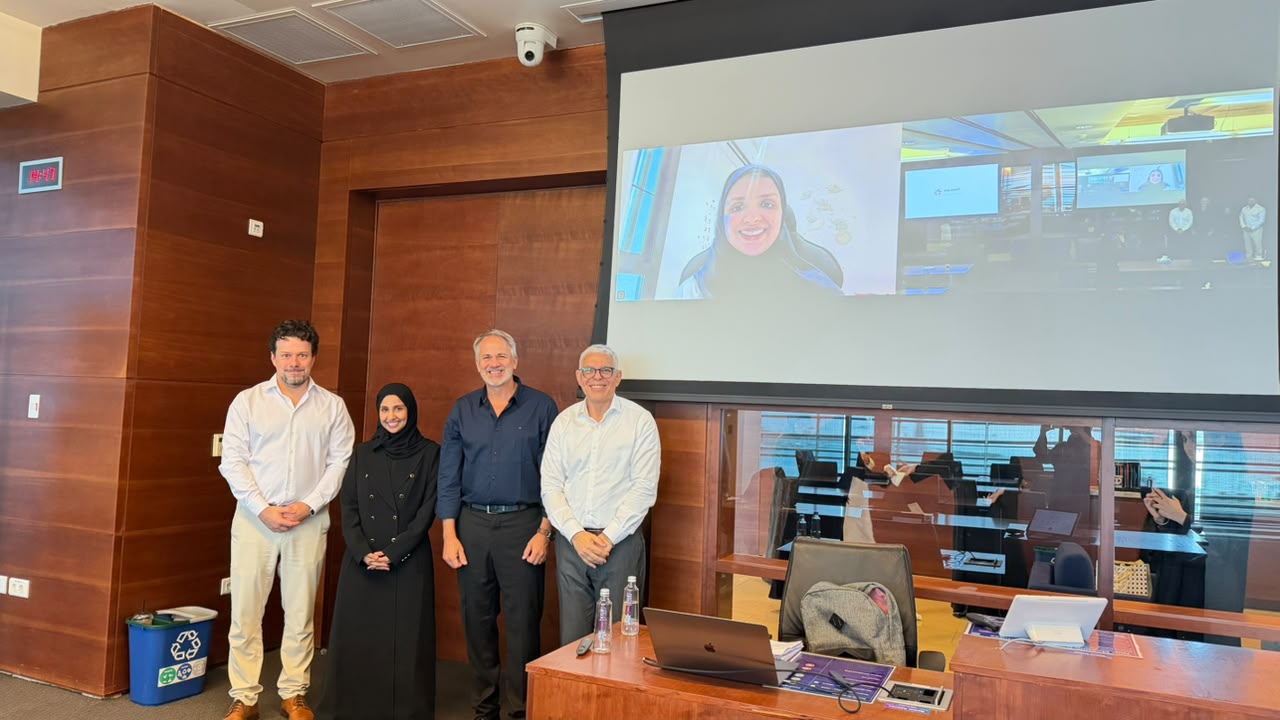
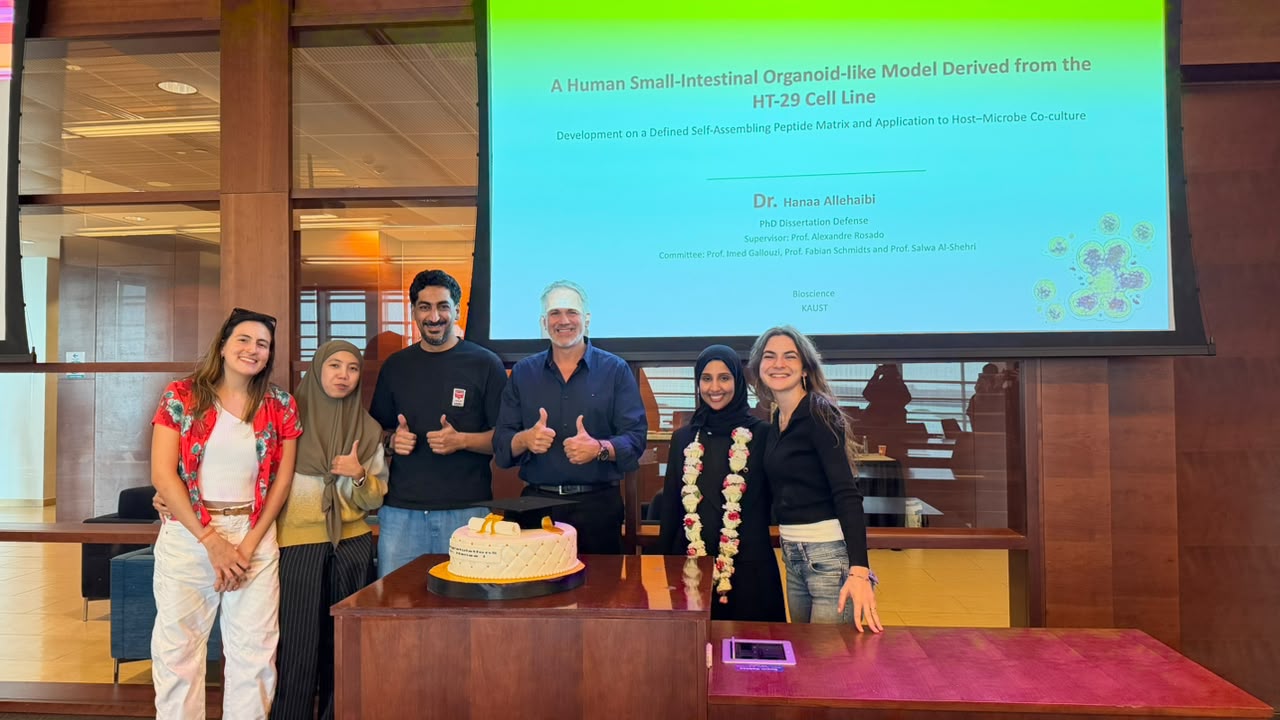
We are happy to announce that Hanaa Allehaibi has successfully defended her PhD thesis, "A Human Small Intestinal Organoid-like Model Derived from the HT-29 Cell Line: Development on a Defined Self-Assembling Peptide Matrix and Application to Host-Microbe Co-culture". Hanaa joined KAUST in 2019 as a Master's student in Prof. Jasmeen Merzaban's lab, where she studied the role of CD26/DPPIV in the homing and engraftment of hematopoietic stem cells. In 2021, she started her PhD here at the MEGB Lab under the supervision of Prof. Alexandre Rosado, in collaboration with Prof. Charlotte Hauser.
Her thesis develops a model of the human small-intestinal epithelium. She grew HT-29 cells in three dimensions inside a chemically defined, synthetic ultrashort self-assembling peptide hydrogel (IIZK), an alternative to animal-derived matrices such as Matrigel. The cultures formed organoid-like structures, and she characterized their barrier properties through transepithelial electrical resistance and tight-junction markers, which matched the leaky barrier expected for the small intestine. As a proof of concept, she then co-cultured the model with bacteria. This is a first step toward a defined platform for studying host–microbe interactions in the gut.
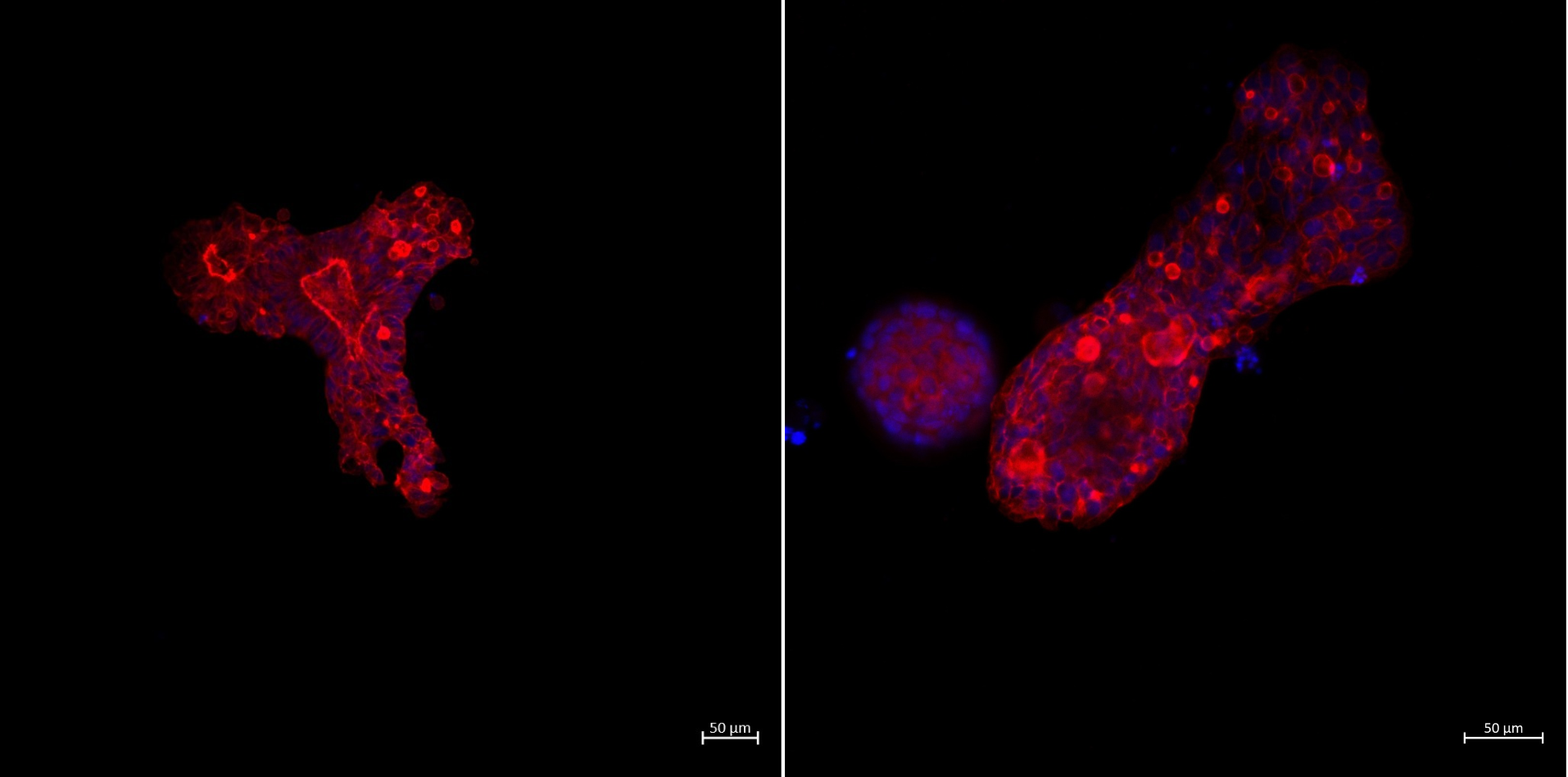
(Image: Hanaa S. Allehaibi)
In her own words: "My years at KAUST have shaped me as a scientist, and I am truly grateful for the mentorship and the collaborative environment. This journey came with its challenges, but also with growth, wonderful colleagues, and a project I truly cared about. I leave KAUST proud of this work and excited for what comes next." Congratulations, Dr. Hanaa! We wish you all the best in your next steps.