.tmb-th1050x650.jpeg?Culture=en&sfvrsn=81398f16_1)
06 October, 2026
To test their limits, we will use our Planetary Simulation Chamber here at KAUST’s MEGBLab. The chamber is specially configured for experiments with biological samples, allowing us to study how microbes survive and respond to Mars-like conditions, including low pressure, a CO₂-rich atmosphere, radiation and extreme temperature changes. We can also use it to investigate extremophilic microbes we have isolated from Saudi Arabia. There is still so much to learn from life thriving in extreme environments here on Earth.
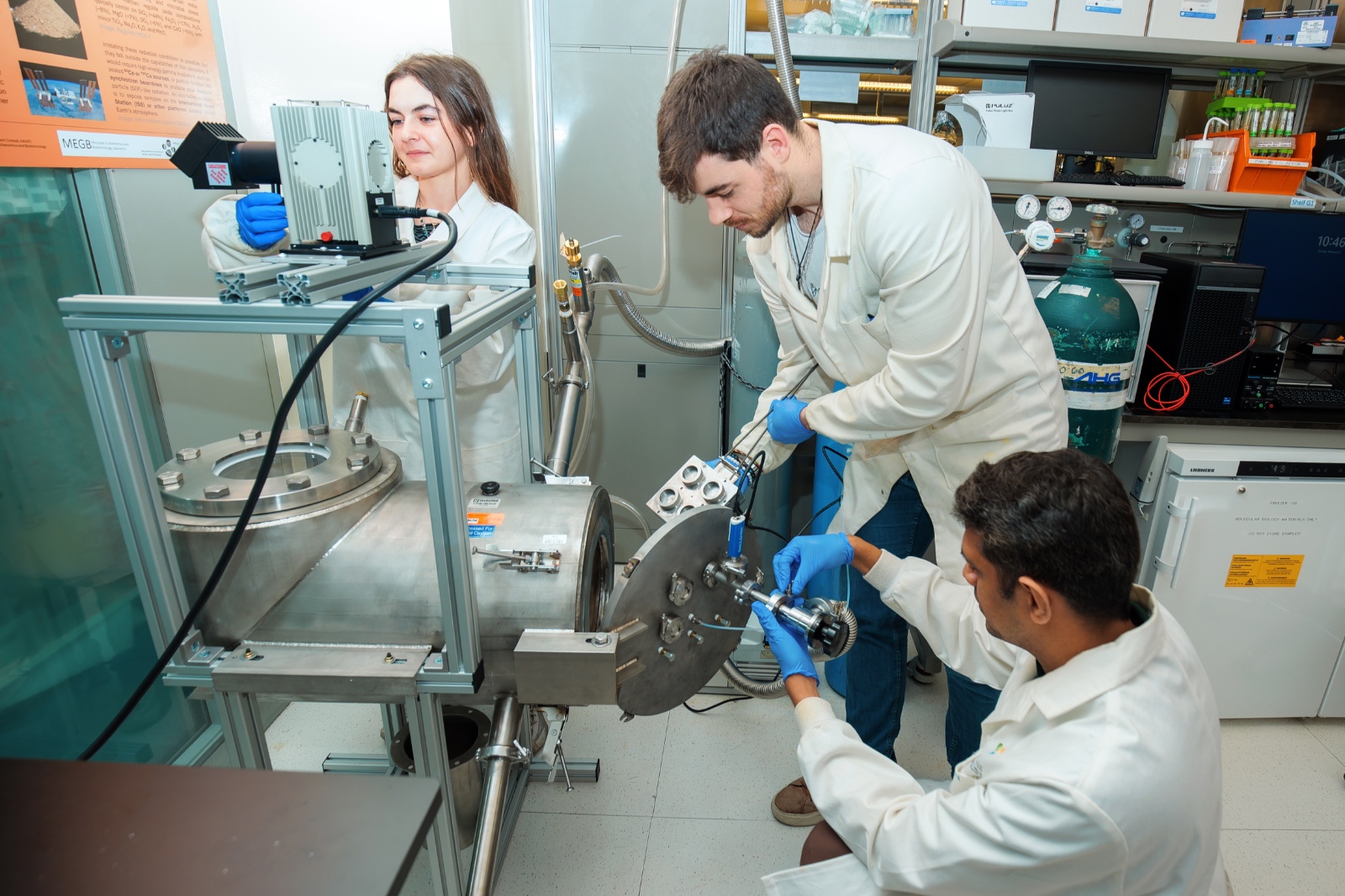
(MEGB Lab Planetary Simulation Chamber)
To celebrate this week, the Saudi Space Agency and King Abdullah Financial District (KAFD) are hosting “Explore Space” at The Wadi in Riyadh, from 4 to 10 October. If you are in Riyadh, take the opportunity to visit and learn more about the Kingdom’s growing space activities. More information is available on the Saudi Space Agency website.
Students interested in visiting our Planetary Simulation Chamber are welcome to contact us!